





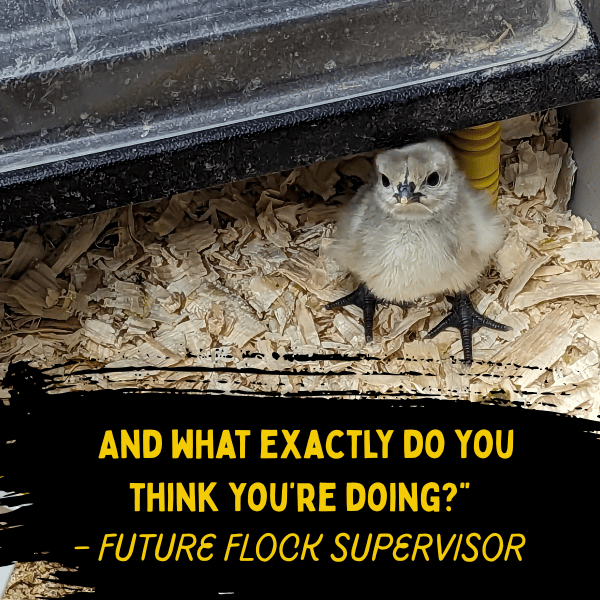





Chickens don't have teeth, which seems obvious until you watch one swallow something that absolutely looks like it should have required chewing first. Mine regularly gulp down bugs, grass, seeds, and whatever questionable treasure they just dug out of the ground without the slightest concern for how any of it is supposed to get broken into smaller pieces.
Fortunately, chickens have another way of handling the problem. Instead of chewing their food before they swallow it, they have a muscular organ called the gizzard that does a whole lot of the grinding afterward. And to do that job properly when they're eating fibrous or whole foods, the gizzard uses something wonderfully low-tech: rocks.
Tiny rocks, technically. But rocks.
This is grit, and despite being one of the least exciting things you'll ever buy for your chickens, it's an important part of how their digestive system works.
Or, as Clancy would probably explain it:
“Chew with your chest.”
Close enough.
What Does Grit Actually Do?
Chicken digestion is weird and fascinating. Food enters through the beak and travels down the esophagus to the crop, which is basically a temporary storage pouch. The crop doesn't grind the food up. It holds and moistens it before that food continues farther into the digestive system.
From there, food moves through the proventriculus, sometimes called the glandular stomach, where digestive acids and enzymes get involved, and then into the gizzard. The gizzard is a thick, muscular organ built to mechanically break food apart. When a chicken has swallowed appropriate insoluble grit, those hard little particles are retained in the gizzard and become part of the grinding process.
Think of it less like a stomach full of rocks and more like a tiny chicken-powered mill. The gizzard contracts around the food and grit, breaking larger and tougher pieces into material the rest of the digestive system can handle more effectively.
This is why chickens don't need teeth. Evolution apparently looked at chewing and said, “Nah, let's make them eat rocks instead.”
Honestly, very on-brand for chickens.

Does Every Chicken Need Supplemental Grit?
Here's where chicken advice sometimes gets more complicated than it needs to be.
If a chicken is eating only a properly manufactured complete pellet or crumble, supplemental grit generally isn't necessary just to process that feed. Commercial feeds have already been ground during manufacturing, so the chicken isn't trying to break down whole kernels and chunks of fibrous plant material in her gizzard.
But chickens have a habit of eating things other than their carefully formulated chicken feed.
The moment your birds are eating grass, weeds, bugs, scratch grains, whole seeds, garden produce, kitchen scraps, or whatever mysterious object they found under the shed before you could get it away from them, the gizzard has actual grinding work to do. That's when access to appropriately sized insoluble grit becomes important.
And let's be realistic. Even if you don't intentionally give your chickens treats, birds with access to the outdoors are going to find things to eat. That's pretty much their entire daily agenda.
But Mine Free Range. Do They Still Need Grit Available?
Free-ranging chickens may find plenty of natural grit while they're scratching around outside. Chickens were finding their own grit long before humans started putting little bags of granite in feed stores.
The problem is that access to the ground doesn't guarantee access to the right material.
Your soil, landscaping, pasture conditions, and local geology all affect what's available. A chicken needs hard particles appropriately sized for her gizzard, not simply access to dirt. Conditions also change throughout the year. Ground that's easy to scratch through in summer may be buried under snow, frozen solid, or turned into a muddy mess later in the season.
Our birds forage too, and I still make grit available to them. It's one of those ridiculously easy things I don't see a reason to gamble on. If they've already picked up what they need while they're outside, they're not standing at the grit feeder thinking, “Well, shit. Better eat more rocks because she paid for them.”
They can take what they need.
Making grit available doesn't mean I assume my chickens are incapable of finding any themselves. It means I don't have to assume that what they find is always enough or appropriate.

Chicks Need the Right Size Grit Too
Chicks don't automatically need grit simply because they're chicks. If they're eating only a complete chick starter, that feed has already been processed into a form their digestive system can handle without adding grit.
Things change once they start eating other foods.
If you give chicks greens, insects, treats, seeds, or let them spend time outside where they're pecking at whatever catches their attention, they should have access to appropriately sized chick grit. The important word there is appropriately.
A tiny chick and a full-grown hen aren't working with the same size equipment. Poultry grit is sold in different grades because the particle size needs to match the size and age of the bird. Chick grit is much smaller than the coarse grit intended for adult chickens, and birds should move into larger grit as they grow.
This is one place where buying actual poultry grit instead of grabbing random gravel from somewhere makes life easier. Somebody has already done the annoying part and sorted it into useful sizes.
What Kind of Grit Should Chickens Have?
When we're talking about digestive grit, we're talking about hard, insoluble material that can stay in the gizzard long enough to help grind food. Granite is commonly sold for exactly this purpose because it's hard, durable, inexpensive, and available in different particle sizes for poultry.
The word insoluble matters. You don't want something that immediately breaks down or dissolves before it can do the job. You also don't need to raid your driveway, aquarium supplies, landscaping beds, or the decorative rock jar your kid made in second grade looking for suitable chicken digestive equipment.
Poultry grit is cheap. Buy the boring bag of rocks intended for chickens and save yourself the archaeological expedition.
Also, sand isn't automatically the same thing as grit. Chickens may pick up coarse mineral particles from sandy or gravelly soil that function as grit, but very fine sand can pass through without providing the durable grinding material larger birds need. What matters is hardness and appropriate particle size, not whether something technically qualifies as a tiny rock.
How Much Grit Should You Give Chickens?
This is the easiest part because you don't need to stand in the coop measuring individual chicken rock rations.
Offer grit free-choice in a separate container and let the birds take it as they need it. I don't mix it into their regular feed because there's no reason for me to decide how much grit each bird should consume. They can handle that part themselves.
A small grit feeder or sturdy container works fine. Keep it somewhere accessible, check it during regular chores, refill it when it's getting low, and try not to put it somewhere that immediately fills with rainwater, bedding, or poop. Chickens will undoubtedly attempt to complicate even this very simple system, but that's chickens.
For multiple pens, I prefer having grit available in each one rather than assuming every bird will encounter it somewhere else on the property. It's cheap, it lasts, and once the setup is there, maintaining it requires almost no thought.
Those are my favorite kinds of chicken chores.

What Happens If Chickens Don’t Have Grit?
This is where I don't want to get dramatic and tell you that forgetting to fill the grit container yesterday means your entire flock's digestive system is about to shut down. Grit can remain in the gizzard for a while, and chickens with outdoor access may already be finding suitable material on their own.
The concern is birds regularly eating foods that require mechanical grinding without reliable access to appropriate grit. The gizzard is designed to grind that material, and grit helps it do that job.
Rather than waiting for a digestive problem and then wondering whether grit availability played a role, I'd rather keep it available. A bag lasts a long time, the chickens decide how much they need, and I've eliminated one unnecessary variable from flock management.
Sometimes chicken keeping really is that simple.
The Easiest Chicken Equipment You’ll Ever Buy
Of all the things we manage with chickens, grit might be one of the least complicated. Buy the appropriate size of insoluble poultry grit, put it in a separate container, keep it available, and move chicks into larger sizes as they grow.
If your birds free range, great. Let them scratch, forage, dig, and collect whatever suitable grit they find naturally. I still keep a known source available because I can't see a good reason to make “I assume there's probably enough of the right rocks somewhere out there” part of my flock-management plan.
That's really it. No complicated schedule, no magic dose, and no need to turn grit into something more exciting than it is.
Your chicken eats something that should probably have been chewed. Her gizzard handles the chewing. The rocks help.
And somewhere in the background, Clancy is yelling:
“CHEW WITH YOUR CHEST.”
I regret giving him a platform.
🐔
No teeth in that beak
Tiny rocks do the chewing
Gizzards are weird, man


