





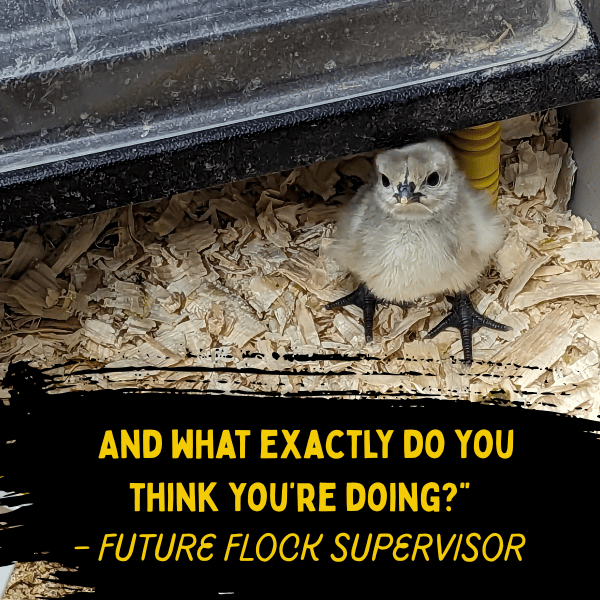




Adding new chickens sounds exciting...
...until your newest hen is getting chased across the run while everyone else acts like she crashed an exclusive dinner party.
If you've ever introduced new birds and immediately wondered whether everybody suddenly hates each other, welcome to chickens. An established flock already has social relationships, and adding new birds changes them. Some pecking, posturing, and chasing during that adjustment is normal.
The goal isn't to eliminate the pecking order.
It's to keep it from turning into an all-out coop war.
A good introduction takes time, space, and a little planning. Throwing a new chicken into the run and telling everyone to make good choices is generally not that plan.
Quarantine New Chickens Before You Introduce Them
If your new chickens came from another farm, swap, sale, auction, or anywhere outside your own flock, deal with biosecurity before you start worrying about whether everyone will get along.
A quarantine period gives you time to watch new birds for signs of illness or parasites before potentially exposing the rest of your flock. Thirty days is a commonly used quarantine period, but simply putting the new chickens in a dog crate next to your existing run for 30 days isn't quarantine.
The whole point is separation.
Ideally, new birds should be housed far enough from your existing flock to reduce the chance of disease spreading between groups. Don't share feeders, waterers, or other equipment without cleaning and disinfecting them appropriately. Take care not to carry manure, bedding, or other contamination from one group to another on your hands, clothing, or shoes. During quarantine, watch the new birds closely for respiratory signs, unusual droppings, mites or lice, changes in appetite, lethargy, or anything else that makes you question their health.
If the birds were hatched and raised on your own farm without outside exposure, that's a different situation. You may still need to keep groups physically separated while you work toward social integration, but that's not the same thing as quarantining unfamiliar birds for disease prevention.
Quarantine and introduction are two different jobs.

Let Them Meet Without Letting Them Fight
Once you're comfortable with the health of the new birds, I'm a big fan of the “see but don't touch” method. Put the new and established chickens where they can see and hear one another without having direct physical access.
You can do this with adjacent runs, temporary fencing, a secure pen inside or beside the existing run, or whatever setup works safely in your space. The point isn't to make everyone instantly love one another. It's to make the newcomers stop being completely new before they're sharing the same space.
How long this takes depends on the chickens. Some groups settle down fairly quickly. Others apparently need to conduct several days of intense negotiations through the fence.
Watch them rather than relying on the calendar.
When everyone has had time to get used to seeing each other, start allowing supervised interaction. Neutral territory can be useful if you have it, but you don't need to build a chicken Switzerland just to introduce new hens. A familiar run can work too, especially if there's plenty of room for birds to move away from one another and the groups have already spent time living side by side.
I also prefer introducing multiple newcomers together whenever possible. A single new hen can become the focus of everybody's attention, while a small group of newcomers has familiar birds with them and spreads some of that social pressure around. That doesn't guarantee nobody will squabble, but I generally don't like putting one lone chicken into an established group if I have another reasonable option.
And don't underestimate the importance of space. New chickens need somewhere to go when a higher-ranking bird tells them to move. Visual barriers, perches, platforms, or other features can help break up sight lines and give birds some breathing room. Just make sure hiding places don't become dead ends where a lower-ranking chicken can be trapped.
Know What's Normal and When to Step In
This is the part that makes people nervous because chickens aren't particularly polite about establishing social relationships.
A peck happens.
Someone gets chased.
There's some chest bumping and dramatic yelling.
And the human is standing there wondering whether it's time to intervene.
Some brief pecking, posturing, chasing, and squabbling can be normal during an introduction. You don't necessarily need to jump in every time one hen tells another to get out of her way. If you constantly interrupt every interaction, the chickens never get much opportunity to work out how they're going to coexist.
What I watch for is repeated or escalating targeting. One bird relentlessly chasing the same newcomer, cornering her, pinning her somewhere she can't escape, preventing her from eating or drinking, or causing an injury is different from a quick peck followed by everybody going about their business.
Blood changes things too. Chickens are attracted to pecking at wounds, so an injured bird may need to be separated and treated before a relatively minor injury becomes a much bigger problem.
Multiple feeding and watering stations are especially useful during this stage. Don't put everything in one location where a dominant hen can control access. Spread resources out enough that lower-ranking birds can eat and drink without having to negotiate with the same chicken every time.
Enrichment can help keep everyone occupied too. We use things like treat skewers, treat balls, scattered treats, and other activities that encourage the flock to peck and forage somewhere other than each other. But enrichment isn't a substitute for enough space, escape routes, and access to food and water.
A cabbage cannot fix shitty flock management.
There. I said it.

Introducing Chicks Takes a Little More Planning
Growing chicks aren't just smaller versions of adult chickens when it comes to introductions. The size difference matters because an adult hen can seriously injure a young bird much more easily than another full-grown chicken.
There isn't one magic age when every chick becomes safe to integrate. Breed, size, development, temperament of the adults, how the birds have been housed, and your setup all matter. That's why I don't love rules like “they must be 12 weeks old” or “they have to be half the size of the adults.” Look at the birds you're actually working with.
The see-but-don't-touch method is particularly useful with youngsters. Letting chicks grow up where the adult flock can see them can make eventual integration less abrupt.
One of my favorite tools for integrating younger birds is a protected area with chick-sized openings. The chicks can move back and forth, but the larger adults can't follow them inside. That gives the youngsters a safe place to eat, drink, rest, or simply get the hell away from Gladys when she's decided she's had enough children for the day.
You also don't have to wait until chicks are old enough to eat layer feed before they can live with adult hens. In a mixed-age flock, you can feed an appropriate complete ration that meets the nutritional needs of the younger birds and offer oyster shell separately for laying hens that need additional calcium.
Broody-raised chicks are their own slightly different adventure. When we have a broody hen raising chicks, we prefer to keep her and the babies within the flock environment but protected behind a barrier at first. Everyone can see and hear one another, but nobody can get to the chicks.
When the barrier eventually comes down, Mama already knows the flock and can do a lot of the social work herself. A good broody can be remarkably effective at telling another hen exactly how close she's allowed to get to those babies.
Not every broody is equally protective, though, so I still watch what happens rather than assuming Mama has everything handled.

Set Everybody Up to Succeed
Successful integration is less about finding one perfect trick and more about removing as many opportunities for trouble as you can.
Give the birds enough usable space. Spread food and water around. Provide places for lower-ranking chickens to move away without getting trapped. Let the groups become familiar before expecting them to share everything. Keep an eye on injuries and make adjustments when one bird is being repeatedly targeted.
This is also why we put together our Pecking Order Peacekeeper CluckKit. It includes some of the things we use to spread activity around the run and keep chickens occupied while everybody figures out the new social arrangement. Enrichment isn't going to magically erase the pecking order, but giving chickens appropriate things to peck, scratch, and investigate certainly beats leaving them with nothing interesting to do except annoy the new girl.
You'll sometimes hear the advice to put new chickens on the roost after dark so everyone wakes up together in the morning. You can use nighttime as part of an introduction after the birds have already become familiar with each other, but darkness isn't an invisibility cloak. When the sun comes up, your chickens are still perfectly capable of noticing that Barbara wasn't there yesterday.
Don't use a nighttime move as a replacement for an actual introduction.
Then give them time.
There will probably be drama. There may be chasing. Somebody is likely to behave as though the arrival of two new hens has destroyed everything she has spent her life building.
That's chickens.
A little drama is normal.
A full-blown coop war is not.
Go slowly, watch the birds in front of you, and intervene when normal social sorting turns into persistent bullying or injury. You aren't trying to stop chickens from having a pecking order. You're giving them enough time, space, and resources to establish one without somebody getting hurt.
And eventually, after all the fencing, supervised introductions, extra feeders, side-eye, squabbling, and chicken diplomacy, everybody will settle down.
Right around the time you decide to add another chicken.

🐔
New hens have arrived.
Everyone has opinions.
No one was consulted.


