





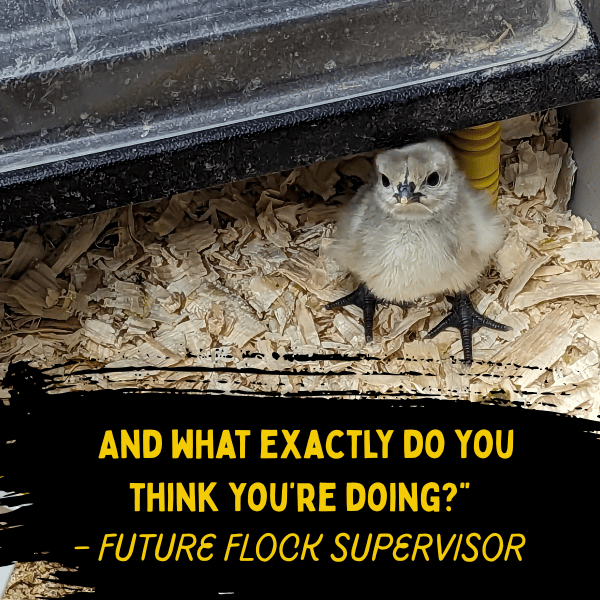


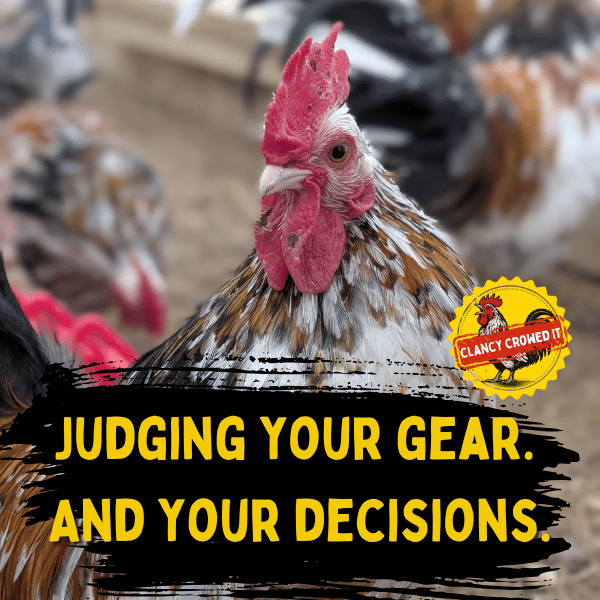


Roosters have a reputation.
Mention that you have one and somebody probably has a story about being chased across a yard, flogged while carrying groceries, or ambushed by a rooster who apparently woke up and chose violence.
But rooster behavior is a lot more complicated than “nice rooster” versus “mean rooster.” Roosters are constantly paying attention to what's happening around them. They're watching their hens, other chickens, predators, strange objects, and yes, you. Once you start paying attention to what they're telling you, some of their behavior makes a whole lot more sense.
That doesn't mean every rooster is going to be friendly. Genetics, hormones, age, temperament, environment, handling, and previous experiences can all play a role in behavior. But how we interact with our roosters matters too, and sometimes we accidentally make things worse without realizing it.
That's where Sara Franklin, co-founder of Roovolution, comes in. She has spent years helping chicken keepers better understand rooster behavior and also helps operate the Rooster Allies Facebook group, where keepers can get help figuring out what the hell their rooster is trying to tell them.
🐓 “There really is no such thing as a bad rooster.” – Sara Franklin
That's Roovolution's philosophy, and whether you've had nothing but wonderful roosters or you're currently afraid to turn your back on Kevin, it's worth understanding where they're coming from.

Understanding Rooster Behavior
A rooster has a lot going on in that little dinosaur brain. He's paying attention to potential threats, keeping track of hens, watching other males, finding food, courting, sounding alarms, and navigating the social structure of the flock.
Roovolution encourages keepers to look at the reason behind a behavior before simply labeling a rooster aggressive. Fear, hormones, previous experiences, changes in the environment, flock dynamics, and human interactions can all affect how a rooster responds.
Sometimes context completely changes what we're seeing.
Sara shared the story of a keeper whose normally friendly rooster suddenly began coming after her. It seemed completely out of character until she discovered that some of his hens had become trapped inside the coop. What looked like an inexplicable personality change made a whole lot more sense once she knew what else was happening.
That doesn't mean every rooster charging at your legs is politely asking you to rescue Susan from behind the feeder. Sometimes a rooster really is directing aggressive behavior toward a person. But instead of immediately deciding he's an asshole, it helps to look at what happened before the behavior started, when it occurs, who it's directed toward, and what's happening with the rest of the flock.
Behavior doesn't happen in a vacuum.
Start Building Trust While They're Young
One piece of advice you'll hear surprisingly often is that handling young cockerels will make them aggressive when they grow up. Roovolution takes the opposite approach and encourages positive, regular interaction while they're young.
That doesn't mean chasing chicks around the brooder because you're determined to make them cuddle. Let them approach you. Sit with them. Offer treats from your hand. Move calmly around them and let them learn that your presence doesn't automatically mean something scary is about to happen.
Routine helps too. Chickens learn remarkably quickly when things happen and what to expect from the people caring for them. Feed them, clean around them, walk through their space, and handle them when necessary without turning every interaction into a production.
I've found that chickens in general are much easier to work with when they're accustomed to me being in their space. That doesn't guarantee every cockerel I raise will grow into a rooster who wants to hang out with me. They're individuals, and I'm perfectly fine with a rooster who doesn't want to be my best friend.
Friendly doesn't have to mean cuddly.
A rooster who calmly shares space with me, moves away when I need him to move, and doesn't consider my legs a personal enemy is perfectly acceptable.
Then Rooberty Happens
Oh, rooberty.
Your sweet little cockerel has been following you around for months, and suddenly he's standing taller, crowing, chasing hens, posturing at other males, and generally acting like somebody handed a teenage boy the keys to a sports car.
Sexual maturity can bring some pretty dramatic behavioral changes. The timing varies by bird and breed, but as a cockerel matures, hormones and changing social relationships can affect everything from courtship and mating behavior to how he interacts with other males and people.
This is also when normal rooster behavior can start making inexperienced keepers nervous. A young male may become bolder, test interactions with other birds, practice courtship, or generally become much more interested in establishing his place in the flock.
Roovolution encourages patience during this stage rather than immediately treating every obnoxious teenage behavior as proof that you've raised an aggressive rooster. That's good advice, with one important caveat: puberty isn't a guarantee that concerning behavior will disappear on its own.
Give a young rooster room to mature, but keep paying attention to what he's doing.
Rooberty explains a lot.
It doesn't excuse everything.
Sara’s Take: “Puberty doesn’t last forever. If you react with patience instead of punishment, most roosters calm down once their hormones level out.”

Don't Turn It Into a Battle
This is probably where rooster advice gets the weirdest.
You'll find plenty of recommendations telling you to pin a rooster to the ground, chase him, kick him, carry him around to humiliate him, or otherwise “show him who's boss.” The basic idea is that you need to establish dominance and make sure the rooster knows you're above him.
Roovolution strongly discourages turning your relationship with a rooster into a constant power struggle, and I agree with the practical reasoning behind that. If every interaction with you involves chasing, cornering, frightening, or physically confronting him, you shouldn't be terribly surprised if he starts treating your arrival as something he needs to respond to.
That doesn't mean you stand there and let a rooster beat the hell out of you in the name of positive reinforcement. Protect yourself. Create distance when you need it. Use barriers or change how you're moving birds if necessary. Nobody gets extra chicken-keeping points for getting spurred in the shin.
The goal is to avoid creating unnecessary confrontations.
If you need to catch a rooster, calmly containing him in a smaller area is usually easier on everyone than chasing him around until you're both pissed off. If he's wary of you, tossing a few treats while you work nearby can help create a different association with your presence. If certain chores repeatedly trigger a problem, pay attention to what you're doing and see whether you can change the setup instead of reenacting the same fight every day.
You don't have to win a battle with your rooster.
You need to be able to safely manage him.
Genetics, Temperament, and Environment All Matter
This is where I part ways with some of the more absolute claims you'll hear about rooster behavior.
How a rooster is raised matters. His experiences matter. His environment and flock dynamics matter. Hormones matter. But genetics and individual temperament can matter too..
That shouldn't be controversial, especially for breeders. We selectively breed chickens for all kinds of traits, and behavior shouldn't magically become exempt from genetics just because it's harder to measure than comb type or feather color.
That also doesn't mean a rooster with a genetic tendency toward more reactive or aggressive behavior is doomed from the shell. Genes aren't a little instruction card inside the egg that says, “Attack Tina at six months.” Behavior develops through a combination of biology and experience.
"Genetics can introduce a risk factor, but environment and training decide whether aggression actually develops," Sara explains.
But if I'm choosing between two otherwise good roosters for a breeding program and one consistently has a stable, manageable temperament while the other repeatedly directs serious aggression toward people, I'm going to take that into consideration.
Temperament matters to me.
Learn the Rooster Standing in Front of You
One of the biggest mistakes we can make is deciding what a behavior means before we actually look at the circumstances.
Is he alerting because something changed in the environment? Is he trying to keep hens away from you? Is another rooster nearby? Did you suddenly walk into the pen wearing a giant floppy hat when you've never worn one before? Is he afraid? Is he guarding something? Is he sexually mature and suddenly navigating an entirely different social world?
Or is he repeatedly coming after people regardless of what else is happening?
Those aren't necessarily the same problem, and they're not necessarily going to have the same solution.
Learn your rooster's normal behavior. Watch his body language. Pay attention to what happens immediately before an incident and what he does afterward. Patterns can tell you much more than deciding he's “mean” after one bad interaction.
And yes, sometimes the pattern tells you that you genuinely have a problem.
That's useful information too.
Think your rooster’s behavior is beyond fixing? Don’t jump to conclusions! Reach out to Sara for a free consultation before making a final decision. She’s helped countless keepers turn their roosters around and is always up for a challenge!

Not Every Rooster Is Right for Every Flock
This is the part I don't want lost in all the talk about understanding rooster behavior.
You can believe that behavior has a reason without believing every rooster must remain in every situation.
A rooster who is manageable for an experienced adult may be completely inappropriate for a home with small children. A rooster who works beautifully in one flock arrangement may cause constant problems in another. A male who is relentlessly rough with hens, repeatedly injures other birds, or consistently attacks people presents a welfare or safety problem that has to be addressed.
Sometimes changing the environment helps. Sometimes separating birds helps. Sometimes working differently with the rooster changes the relationship. Sometimes an experienced new home is a better fit.
And sometimes a rooster simply isn't a bird you want to keep or breed.
That's okay.
Understanding behavior isn't the same thing as making excuses for dangerous behavior. And deciding that a particular rooster doesn't belong in your flock doesn't mean you've failed him.
I raise a lot of roosters, and I'll admit I'm pretty damn partial to my boys. We have multiple bachelor pens here, and they're honestly some of my favorite places on the farm to just sit for a while. There's something about hanging out with a group of roosters when you aren't asking anything of them. You get to watch all the little relationships, personalities, ridiculous posturing, and conversations happening between them that you'd miss if you only ever saw roosters as the noisy extra males nobody knows what to do with.
That doesn't mean I believe every rooster belongs in every flock. I don't. I breed chickens, and temperament matters to me. A rooster can be beautiful, genetically valuable, and great with his hens and still not be the right bird for a particular situation. Understanding why he's behaving a certain way doesn't mean ignoring behavior that's dangerous to people or harmful to the flock.
That's one of the things I appreciate about Roovolution's approach. Instead of starting with “bad rooster,” they encourage people to get curious first. Look at what he's communicating. Look at what changed. Look at how you're interacting with him. Give a young bird time to mature. Build trust instead of creating unnecessary battles.
Then make your decision based on the rooster actually standing in front of you.
Because the goal isn't to raise a rooster who never behaves like a rooster. It's to understand the bird you have, be able to safely manage him, and hopefully discover why some of us end up sitting in bachelor pens for fun.
They're good company.
Want to learn more?
📖 Sara (& Jacob) Franklin’s book Through Their Eyes: A Revolutionary Guide to Rooster Care , The ultimate resource for rooster behavior, training, and care.
🌐 Visit her website: www.jointheroovolution.com
📌 Join the Rooster Allies Facebook group – A supportive community for rooster keepers.
🆓 Need more help? Book a free consultation at https://www.roovolution.org/book-online.
🐓🔥 Because every rooster deserves a chance to be understood.
🐔
Crowed before sunrise.
Nobody asked his opinion.
Shared it anyway.


