








There comes a point in almost every chicken keeper's life when you walk into the coop, see feathers everywhere, look at one particularly unfortunate hen, and wonder what the hell happened overnight.
Before you start searching for evidence of a predator attack, take a good look at the chicken. She may just be molting.
Molting is the normal process of shedding old feathers and replacing them with new ones. Adult chickens commonly go through a major molt as daylight decreases later in the year, although exactly when it happens and how dramatic it looks can vary quite a bit from bird to bird.
Some chickens handle molt with dignity.
Others look like somebody partially plucked them and then got distracted.
Both can be normal.
Chickens Start Replacing Feathers Long Before Their First Adult Molt
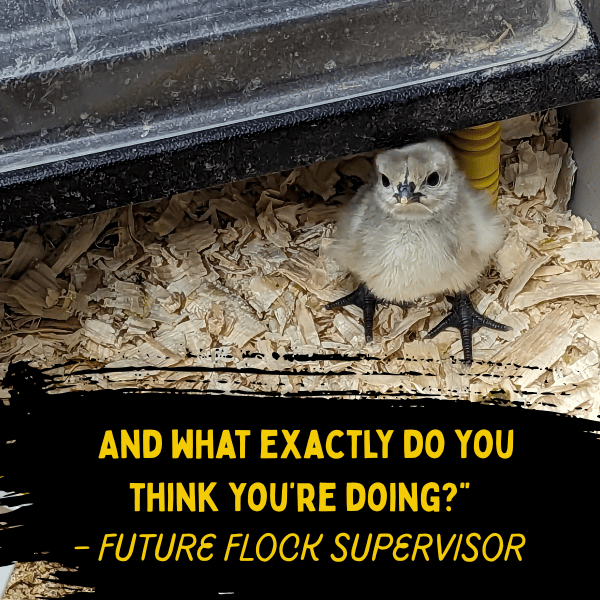
Molting isn't something that suddenly begins when a hen reaches a certain birthday. Chicks start replacing that adorable baby fluff with actual feathers while they're still tiny, then continue replacing juvenile plumage as they grow.
You can practically watch it happen. One minute you've got a round little fluff ball. Then wings appear. Tails happen. There are awkward patches and feathers sticking out at strange angles. Eventually that baby chick starts looking suspiciously like an actual chicken.
Young birds go through these developmental feather changes as they mature. The big seasonal molt people usually mean when they say “my chicken is molting,” however, generally comes later, after they've grown their adult plumage.
Soft Molt or Holy Crap, What Happened to You?
Not every chicken molts the same way.
Some go through what we'd call a soft molt, losing and replacing feathers gradually enough that you may barely notice beyond extra feathers scattered around the coop and a slowdown in egg production.
Then there are the hard molters.
Those are the birds that walk out one morning looking like they've made several terrible life choices overnight. Feathers seem to be everywhere. Tails disappear. Necks get scraggly. The coop floor looks like a pillow exploded, and the chicken herself looks like she lost whatever fight caused it.
It can be dramatic as hell.
As long as you're seeing normal new feather growth and the bird otherwise appears healthy, ugly doesn't necessarily mean something is wrong.
Sometimes molt is just really ugly.

What Are Those Weird Little Porcupine Feathers?
Once the old feathers come out, new ones begin growing in. They emerge as pin feathers, with the developing feather protected inside a keratin sheath. When a chicken has a bunch coming in at once, especially around the head and neck, she can look a little like somebody crossed a chicken with a porcupine.
Those new feathers are also sensitive. Developing feathers have a blood supply while they're actively growing, so this isn't the time for unnecessary handling just because your pathetic-looking chicken makes you want to pick her up and tell her she's still pretty.
She doesn't care.
Give her some space and be gentle when you do need to handle her.
She's growing an entire new outfit out of her skin. I'd be cranky too.
Where the Hell Did All the Eggs Go?
Sometimes the first sign of molt isn't feathers.
It's the empty egg basket.
Growing a new set of feathers takes resources, and hens commonly reduce or stop egg production while they're molting. Natural seasonal molt also tends to happen as daylight is getting shorter, and changing day length affects reproductive activity too.
So if feathers start flying and your egg count falls off a cliff, your hens probably haven't formed a union.
Their bodies have other priorities.
Don't expect every hen to clock back into work the second her last tail feather finishes growing, either. Age, breed, health, nutrition, season, and daylight can all influence when and how strongly laying resumes.
The eggs will come when the chicken is ready.
Apparently she did not receive your production forecast.

Does a Molting Chicken Need More Protein?
This is where perfectly reasonable chicken advice can go completely off the rails.
Feathers are largely made of keratin, which is a protein, so nutrition absolutely matters while a bird is replacing them. That does not mean your molting flock should spend the next six weeks surviving on mealworms, scrambled eggs, tuna, or whatever high-protein concoction somebody on Facebook invented this week.
The entire ration matters.
For most backyard keepers, the starting point should be an appropriately formulated complete feed and making sure treats aren't displacing the balanced nutrition the birds actually need. If you're considering changing the protein level or using a different ration during molt, understand what you're changing and why rather than randomly throwing protein at the problem.
Mealworms are still treats during molt.
They don't become a complete feed just because your hen currently looks like a feather duster somebody set on fire.
How I Manage Molt Every Year
Here's where my management differs from what a lot of backyard chicken keepers do.
Every year, I intentionally bring my adult birds into molt around the same time.
I have a pretty practical reason for it. I'm in northwest Ohio, and I want my birds through the worst of their molt and well on their way to growing a good set of feathers before the cold weather gets here. I'd rather have everybody looking like a half-plucked disaster together in late summer than have individual birds deciding November seems like a fantastic time to dump a bunch of their insulation.
I use a specific feed ration for a short period to help initiate molt and bring the flock onto roughly the same schedule. Once the molt is underway, my nutritional goal changes to supporting the birds while they grow their new feathers and return to normal condition.
I'm not doing this because I'm trying to squeeze another production cycle out of them. I already expect egg production to drop during molt.
I'm managing the timing.
And because the words forced molt or induced molt have some baggage attached to them, let me make something very clear: I'm not withholding food or water from my chickens. Historically, some commercial molt programs have used severe feed restriction to induce molt. That's not what I'm doing.
I'm using a planned nutritional program as part of my annual flock management.
I'm also not going to give you my ration in this article and tell you to copy it. Changing a flock's diet deliberately to manipulate molt requires understanding what you're feeding, why you're changing it, how long you're using it, and what those birds need afterward.
If you don't have a reason to induce molt and don't understand the nutrition behind doing it, you don't need to. A normal seasonal molt is exactly that: normal.
This is simply how I choose to manage mine.
How to Help Chickens Through a Molt
Whether you manage molt intentionally like I do or let your flock follow its natural schedule, most healthy chickens don't need you hovering over them with seventeen supplements and an emergency feather-growth protocol.
They need good nutrition, clean water, a safe environment, and somebody paying enough attention to notice when something actually isn't right. Keep unnecessary stress to a minimum, maintain your normal parasite checks, and be especially gentle with birds covered in sensitive new pin feathers.
If you can avoid major flock upheaval while everybody looks like hell, even better. Molt isn't my favorite time to start rearranging social groups or introducing a pile of new birds unless there's a reason I need to.
Mostly, pay attention without trying to fix something that isn't broken.

Is It Molt or Something Else?
This part matters because not every naked chicken is molting.
Normal molt tends to come with feather shedding followed by visible new feather growth. Your chicken may look absolutely ridiculous, but she should still generally behave like a chicken. Pin feathers appearing in the areas where old feathers were lost are a pretty damn good clue that she's busy replacing them.
Feather loss can also happen because of parasites, feather picking, bullying, rooster damage, nutritional problems, and other health issues. Look at where feathers are missing, whether the skin is irritated or injured, whether other birds are picking at her, and whether you're actually seeing new feathers growing in.
And look at the chicken, not just the feathers.
If she's lethargic, losing significant body condition, not eating or drinking normally, has wounds or damaged skin, or otherwise seems genuinely sick, don't dismiss it because “it's molting season.”
Sometimes a naked chicken is molting.
Sometimes something else is going on.
Knowing your birds well enough to question the difference matters more than memorizing a calendar.
The Molt Will End. Eventually.
Molting can make a perfectly respectable chicken look absolutely ridiculous. There will be feathers everywhere. Egg production may tank. Your normally friendly hen may decide touching is currently forbidden, and for a while everybody may look considerably less impressive than they did a month ago.
Then the pin feathers start opening. The new plumage fills in. And suddenly that ragged little disaster you've been staring at is standing in the coop wearing a gorgeous new set of feathers like none of this ever happened.
Meanwhile, you're still sweeping up the old ones.
Because chickens.
🐔
Feathers everywhere
Hen looks like absolute hell
New ones coming in


