


 $6.18
$6.18


So, you're getting chicks. Congratulations!
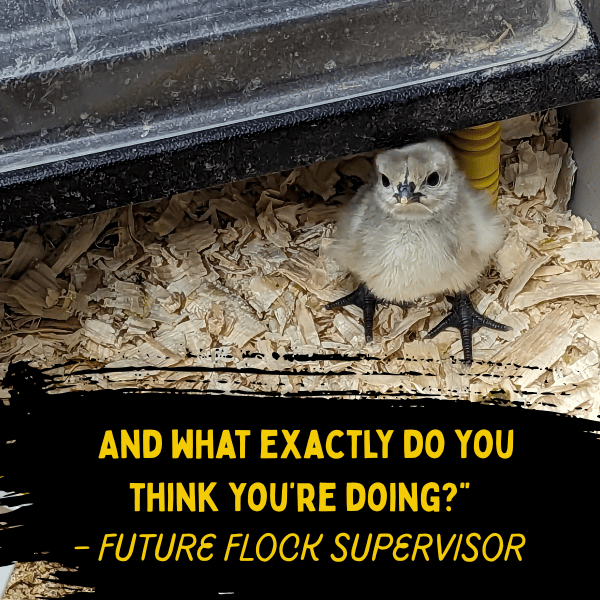
Before those tiny fluffballs arrive, now is the time to get your brooder set up. Trust me, the last thing you want is to realize you're missing a waterer after your chicks are already home.
A well-prepared brooder keeps chicks warm, healthy, and safe from day one. It also makes those first few weeks a whole lot less stressful for you.
Here's everything we recommend having ready before hatch day.

Chickens won't solve all my problems. They won't pay my bills, finish the work I've been avoiding, clean my house, or magically make a crappy day less crappy. In fact, depending on what they've managed to get themselves into, they may very well add another problem to the list.
But they're still good for MY mental health.

One of the strangest things about preservation breeding is that you spend an awful lot of time deciding which chickens are not going to breed. That sounds backwards when the whole point is preserving a population. Genetic diversity matters, variation matters, and we don't want to narrow these chickens into uniform little copies of each other, so shouldn't we keep as much as possible?
Yes. And also, no.

You can own a rare chicken without preserving anything.
That probably sounds a little harsh coming from someone who would very much like people to buy rare chickens from her, but hear me out. If you buy six Swedish Flower Hens because you think they're gorgeous and want them wandering around your backyard, fantastic. Enjoy the hell out of them. Give them ridiculous names. Take 900 pictures. Let one become so obsessed with you that she follows you along the fence yelling because apparently your whereabouts are now her business. cough Sheila cough


Summer can be hard on chickens.
Unlike us, chickens can't sweat, so they have to get rid of excess body heat in other ways. On a hot afternoon, you may see your flock panting, holding their wings away from their bodies, hanging out in the shade, and generally doing as little as chickenly possible.

Spend enough time watching chickens and you'll eventually realize there's a whole lot more happening out there than eating, laying eggs, and occasionally screaming for reasons known only to them. Your flock has relationships. They know each other, communicate with each other, and absolutely do not treat every chicken in the group the same way.

Some chickens were bred to be pretty.
Some were bred to lay like machines.
Ölandsk Dwarfs? They were shaped by wind, rock, predators, and farmers who did not have time for useless birds.
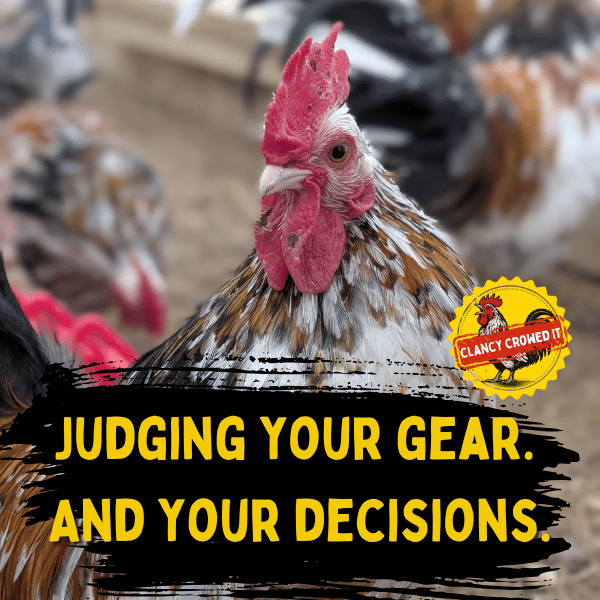
These rare, true dwarf chickens come from Sweden’s island of Öland, where isolation and harsh conditions carved out a landrace that’s tough, watchful, and way more capable than its size suggests. They’re smart, self-sufficient, and a little bit judgey in the best way.

I love a crested chicken. There is something about a chicken with ridiculous feathers sticking out of the top of her head that immediately gives her about 40% more personality. And within my own flocks, there is no shortage of ridiculous hair. My Shetlands can range from full-on bouffants that fall over their eyes to little swept-back mohawks. All of my Icelandics are crested too, although their crests are much more modest and don't interfere with their vision. Swedish Flower Hens can be crested or non-crested, with plenty of variation between individual birds.

Landrace chickens are pretty damn cool. We raise a bunch of them, spend an unreasonable amount of time talking about them, and have devoted a significant portion of our farm to keeping them around, so obviously we're fans. But somewhere along the way, the word “landrace” started acquiring almost magical powers. Depending on who you ask, these chickens never get sick, thrive in every climate, practically feed themselves, all look completely different from one another, and possess so much genetic diversity that breeding decisions apparently no longer matter.
Yeah. No.

If you keep chickens long enough, eventually you're going to reach into a nest box, pull out an egg, and say, “What the hell happened here?”
Maybe it's tiny. Maybe it's enormous. Maybe it's wrinkled, bumpy, flat on one side, or feels like somebody forgot to install the shell. Crack one open and you might find two yolks, a blood spot, or something else you definitely weren't expecting with breakfast.

If you'd asked me a few years ago whether you should brood chicks with a heat plate or a heat lamp, I would've told you heat plate. End of discussion.
I don't say that anymore.
After brooding a hell of a lot more chicks in different setups, I've changed my mind. I use both heat plates and heat lamps now, because I've learned that there isn't one perfect heat source for every brooder, every group of chicks, or every situation.