








Put seven Swedish Flower Hens next to each other and you might wonder how the hell they're all the same kind of chicken. One might be black and white, another red and brown. One has a crest while the bird next to her doesn't. Their flowering can vary wildly, and some birds may barely look flowered at all.
But underneath all that color and pattern, they should still look like Swedish Flower Hens. They share the same general round, robust body type and size range.
Walk over to our Hedemoras and you'll find another kind of variation entirely. Different colors, different feathering, mostly four toes but occasionally five, smooth legs on some birds and a little feathering on others. And, of course, those ridiculous fluffy Hedemora pants.
If you're used to standardized chicken breeds, all that variation can be confusing. Which bird is correct? Which color are we supposed to breed toward? Shouldn't preservation mean trying to make them all look like whatever the “ideal” chicken is supposed to look like?
With landrace chickens, those are the wrong questions. Variation isn't something we're trying to eliminate.
But that doesn't mean anything goes.
And that little distinction is basically the whole point of landrace preservation.
So What Is a Landrace Chicken?
A landrace isn't just an old chicken breed. It isn't a mixed breed with a fancy name, and it isn't automatically a chicken that comes in lots of colors. A landrace is a population shaped over generations by the place where it lived, the conditions it lived under, and the people who kept it.
Historically, those people weren't trying to win poultry shows. They needed chickens that worked. Birds needed to reproduce, hens needed to lay enough eggs to be useful, mothers needed to raise chicks, and the flock needed to function together. Most importantly, those chickens needed to survive the conditions where they were being kept.
That process can leave behind a population with considerably more visible variation than we're accustomed to seeing in standardized breeds. The Swedish Gene Bank material for the landraces we raise makes this particularly clear. Their breeding guidance doesn't tell preservation breeders to make every bird look identical. Instead, it emphasizes maintaining variation within the breed frame, along with appropriate weight, reasonable egg production, good parenting ability, and functional flock behavior. Color is treated as less important than those functional traits.
That's a very different way of looking at chickens.
Landrace Doesn't Mean "No Rules"
This is probably one of the biggest misconceptions about landraces. If variation is important, why select at all?
Because preservation breeding is still breeding. We're not throwing every chicken we hatch into a breeding pen and calling whatever comes out “genetic diversity.” There is still a framework, and preserving that framework is part of the job.
Take the Ölandsk Dwarf. They're supposed to be tiny. That's part of the population we're preserving. The Swedish breed frame gives hens a weight range of about 0.5 to 0.8 kg and roosters about 0.6 to 1.0 kg, and breeders are specifically advised against using roosters over 1 kg because maintaining that dwarf size matters.
So if I hatch an enormous Ölandsk rooster, I don't get to shrug and say, “Well, variation is the point!” I have a giant Ölandsk Dwarf, which is a sentence that should already tell me something has gone sideways.
Variation exists inside the population's framework. That's the part people miss.
Function Comes Before Fancy
This is probably the simplest way to explain how we approach our landrace breeding program. We look at the chicken underneath the feathers first.
Is the body type appropriate for the population? Is the bird healthy and functional? How is fertility and hatchability? Are we maintaining reasonable production? How does that bird behave within the flock? Can the hens reproduce and successfully parent chicks?
Then we can talk about the pretty stuff.
Because the pretty stuff is fun. Hell, some of these birds are spectacular. It just doesn't get to drive the bus.
The Swedish Gene Bank guidance for Swedish Flower Hens makes this especially obvious. These birds can vary tremendously in color, and some are crested while others aren't. Yet breeders are specifically told that color is secondary to weight, production, parenting skills, and satisfactory flock behavior.
That's preservation in a nutshell: keep the chicken working like the chicken it's supposed to be before worrying about whether you like its outfit.
Why Does All That Variation Matter?
Variation gives a population options, but I want to be careful here because this gets oversold. Genetic diversity does not mean every landrace chicken is automatically healthier than every standardized chicken. It doesn't make them immune to disease, it doesn't guarantee they'll thrive anywhere you put them, and it definitely doesn't mean you can provide crappy husbandry and tell everybody your chickens are “landrace hardy.”
What diversity does give us is a broader pool of traits within a population. That's important because environments change, disease pressures change, management changes, and sometimes a trait that didn't seem particularly important yesterday becomes useful tomorrow.
Every time we narrow a population because we personally like one color, feather type, egg color, crest, or other flashy characteristic, we're making a decision about what gets carried into the next generation and what doesn't. Do that long enough and we've changed the population.
That's why preserving variation isn't the same thing as refusing to select. It's about being thoughtful about what we're selecting away.
Six Landraces, Six Different Lessons
We currently work with six landrace chicken populations at Cluck It All Farms: Swedish Flower Hens, Swedish Black Hens, Hedemoras, Shetland Hens, Ölandsk Dwarfs, and Icelandics.
The more time I spend with them, the less sense it makes to describe landraces as though they're all different versions of the same kind of chicken. They're not. Each population has its own history, characteristics, quirks, and preservation challenges, and each one has taught us something different about what preserving a landrace actually means.
Swedish Flower Hens: Pretty Is Not the Point
Swedish Flower Hens are probably one of the easiest landraces to fall in love with based on looks alone. They're gorgeous. Their characteristic white-tipped feathers create the “flowers” that gave them their name, and those white areas tend to increase as the birds molt. Their base colors can vary considerably, and some birds are crested while others aren't.
But underneath those differences is the round, robust body type characteristic of the landrace. Swedish Flower Hens are the largest of Sweden's native chicken landraces, and ours are generally consistent in their overall size and frame. That's important because preservation isn't about creating increasingly wild variation just for the sake of variation. We're maintaining variation while also maintaining the chicken underneath it.
It would be incredibly easy to start breeding Swedish Flowers for whichever color sells best, the biggest crest, or the flashiest pattern. That's exactly where preservation can go sideways. The Swedish guidance doesn't tell us to make them match. It tells us to maintain their weight, production, parenting ability, flock behavior, and variation while treating color as secondary. It also cautions against crest-to-crest breeding because excessive crest development can interfere with a bird's field of vision.
Our own Swedish Flower flock gives us roughly 150 to 200 eggs per year. Ours occasionally go broody, although they generally don't stick with it very long. And personality? Well, we have Sheila.
Sheila needs to know where I am, what I'm doing, why I'm doing it, and whether there are snacks involved. When I'm in the chicken house, she's watching for me, and the second I enter her pen she's underfoot investigating whatever I'm doing.
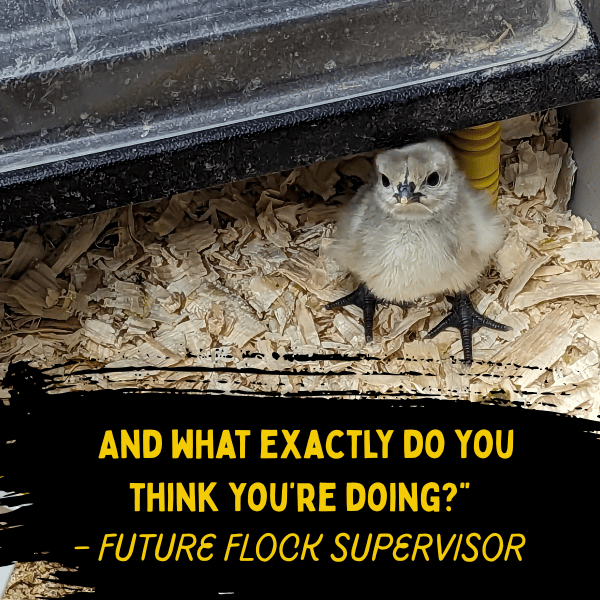
Apparently supervision is also a Swedish Flower trait at Cluck It All Farms.

Swedish Black Hens: When One Spectacular Trait Can Become a Trap
Swedish Black Hens are an excellent example of how easy it is to confuse a memorable trait with the entire point of a landrace. They're fibromelanistic, which means that dark pigmentation isn't limited to their feathers, combs, or faces. Pigmentation can occur throughout the body, including the skin, connective tissues, bones, and internal tissues.
So yes, pigmentation is a major part of what makes these chickens distinctive. But breeding solely for the blackest possible chicken misses the bigger picture. The Swedish preservation guidance still brings breeders back to appropriate weight, reasonable production, parenting ability, functional flock behavior, and maintaining the overall character of the population.
And if you've read our full Swedish Black article, you know these little goth chickens also happen to be the broodiness champions of this farm. Ours are notoriously broody, which also means their yearly egg totals can end up on the low side.
Getting some of them to reconsider motherhood is approximately as effective as filing an appeal with a brick wall.
That's part of the population we're actually working with too, and it's something we pay attention to alongside body type and function.

Hedemora: Built for a Place
If you want a physical example of adaptation, look at a Hedemora. The Swedish breed material describes an unusually dense, downy plumage and connects that plumage with their long adaptation to a cold climate.
But again, there isn't one Hedemora look. They can be blue, black, white or nearly white, wild-colored, or wheat-colored. Legs can be smooth or slightly feathered. Four toes are most common, but five can occur. Feather structure can be smooth or woolly, and some birds show varying degrees of fibromelanosis, meaning dark pigmentation can occur throughout the body rather than being limited to visible areas like the comb or face.
And yes, they have those magnificent thigh feathers that make them look like they're wearing pants.
The preservation warning here is particularly useful. Traits like woolly feathering, extra toes, or feathered legs can occur naturally within Hedemoras. The problem comes when breeders decide one of those unusual traits is especially desirable and start selecting heavily for it generation after generation. Eventually, instead of preserving the variation within the population, you've started changing the population around the trait you happen to like best.
That's the difference between preserving variation and turning your favorite variation into the whole damn chicken.

Shetland Hens: Sometimes the Chickens Survive Better Than the Paperwork
Shetlands taught us a completely different preservation lesson. Unlike our Swedish landraces, we haven't been able to find an official Shetland breed frame or preservation guideline. Much of the information available about them today comes from breeders who have maintained the birds and from importer documentation.
There are some fantastic stories about their origins, including the often-repeated tale involving Spanish ships and South American blue-egg chickens. Maybe parts of that story are true, but we haven't found enough solid historical documentation to tell you the whole thing is established fact. So we don't.
Sometimes the living population survives even when the historical paper trail doesn't.
Our Shetlands are one of our favorite populations to keep. They're curious, friendly, and nosy as hell. If you're doing something near them, they want to know what you're doing and whether it involves snacks. Most of ours lay blue or green eggs, although we occasionally see brown or white eggs too. I actually have a white-egg-laying Shetland hen right now.
We see broodiness in roughly 30 to 40 percent of our Shetland hens, and I've let them hatch their own chicks successfully. For us, preserving them starts with maintaining the functional dual-purpose body type and the hardiness we're working with. We pay attention to health and disease resistance within our flock as well.
Personality matters to us because these are wonderfully friendly, curious chickens, but body type and function come first. We're not going to keep a poorly built bird in the breeding program simply because she's sweet, and we're not going to invent an American Shetland standard just because history left us some blanks.

Ölandsk Dwarf: Tiny Is Part of the Job Description
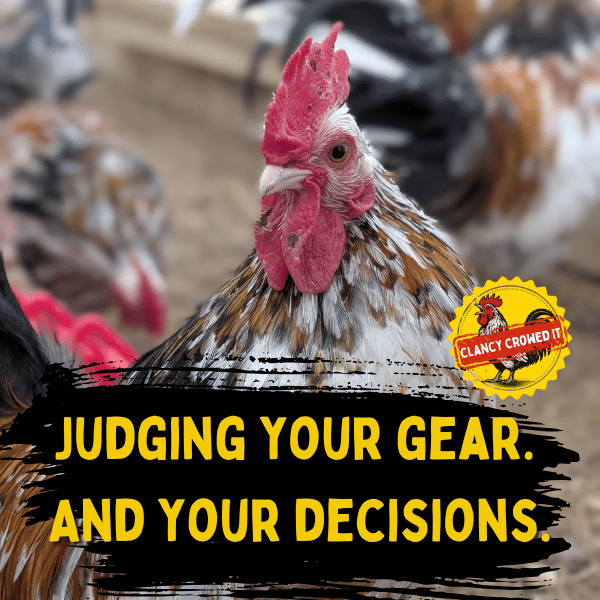
Then we have Clancy, which means we have to talk about Ölandsk Dwarfs.
These little chickens come from the Swedish island of Öland and survive today in two closely related strains, Petgärde and Asklunda. They're tiny, but they're not supposed to look weak or delicate. The Swedish breed frame describes a short, powerful body, with hens around 0.5 to 0.8 kg and roosters around 0.6 to 1.0 kg.
This is where preservation gets wonderfully specific: keep them small.
That's not just cosmetic. Their tiny size is part of what makes an Ölandsk Dwarf an Ölandsk Dwarf. The breed frame specifically advises against breeding roosters over 1 kg if these chickens are going to continue being dwarf chickens.
They're also surprisingly productive for their size. Swedish preservation information gives roughly 130 eggs per year for a non-broody hen and reports broodiness around 50 to 60 percent, noting that almost every hen will brood if given the opportunity. So we're talking about a tiny, sturdy little chicken with respectable production and some pretty strong maternal ambitions.
And then there's Clancy, who has somehow turned being an Ölandsk Dwarf rooster into an entire media career.

Icelandics: A Landrace Doesn't Need Everybody to Match
Icelandics give us another version of the same lesson. They've been associated with Iceland since the Norse settlement period and remain highly variable in appearance. You'll see numerous plumage colors and patterns, different comb types, and occasional crests.
They're active, alert foragers that fly well and like to roost high. They also have a reputation for good production relative to their feed requirements, including winter laying, and some hens go broody and make good mothers.
But what I find most interesting is the same idea that keeps showing up throughout this article. Icelandics aren't maintained around a conventional Standard of Perfection designed to make every bird visually match. Variation is part of the population.
That doesn't mean nobody selects them. It means matching feathers aren't the goal.

What We're Actually Doing When We Preserve a Landrace
This is the part I wish somebody had explained to me more clearly years ago. Preservation isn't freezing a chicken population in time, and it isn't breeding without making decisions.
Every time we choose which rooster stays in a breeding pen, we're making a decision. Every time we choose which hens contribute to the next generation, we're making a decision. Every bird we don't breed is a decision too.
So the question isn't whether preservation breeders select. Of course we do. The question is what we're selecting for.
At Cluck It All Farms, body type and function come first. We want birds that stay within the appropriate framework for their population, and we care about health, fertility, hatchability, reasonable production, parenting ability, and flock behavior.
Temperament matters to us too. I spend a lot of damn time with these chickens, and I don't want to preserve a population of assholes if I can help it. But personality still comes after body type and function.
Then we look at all the other things that make these populations fascinating: color, crests, feather types, egg colors, pigmentation, and all the weird little surprises landraces throw at you. We enjoy those things. We just don't let them become the only reason a bird reproduces.
Landrace Doesn't Mean Better. It Means Different.
This is another thing I want to be really clear about. Landraces aren't automatically “better chickens.” (Do we think they're better chickens? Absolutely. But we're probably a little biased. 😂)
A production breed may absolutely be the better chicken for somebody whose priority is maximum egg production. If you want to look across your flock and see birds that are pretty darn consistent in color, size, and appearance, a standardized breed may be more your speed. And a landrace developed in one environment isn't automatically perfectly adapted to yours.
That's why “Which chicken is best?” is usually the wrong question. A much better question is “What kind of chicken fits what I'm trying to do?”
If you value variation, preservation, functional traits, and the opportunity to help maintain populations that weren't developed around visual uniformity, landraces are fascinating chickens to keep. But they aren't magic. They're chickens. Very cool chickens, occasionally ridiculous chickens, but still chickens.
The goal isn't to convince everybody that landraces are better. It's to understand what they are, why their diversity matters, and whether that kind of chicken fits what you actually want from your flock.
Pretty Is the Bonus
That's probably the easiest way to sum up how we think about landraces here. We absolutely enjoy the pretty. I will admire a gorgeous Swedish Flower Hen, laugh at Hedemora pants, appreciate a spectacular Swedish Black, and enjoy a Shetland tappit. And obviously Clancy is convinced every feather on his tiny Ölandsk body is a national treasure.
But when we're deciding what carries forward into another generation, we have to look underneath all of it. These chickens weren't preserved so we could turn them into ornaments. They have jobs to do: stay healthy, reproduce, lay, parent, function in a flock, and maintain the characteristics that make their population what it is.
Our job is to make breeding decisions that keep those functional traits intact without narrowing away the useful variation that makes a landrace a landrace. We want the next generation of preservation breeders to inherit something worth working with, not a population we redesigned around whatever happened to look prettiest while it was ours.
That's diversity with a job to do.
🐔
Colors come and go
Useful chickens carry on
Pretty comes second


